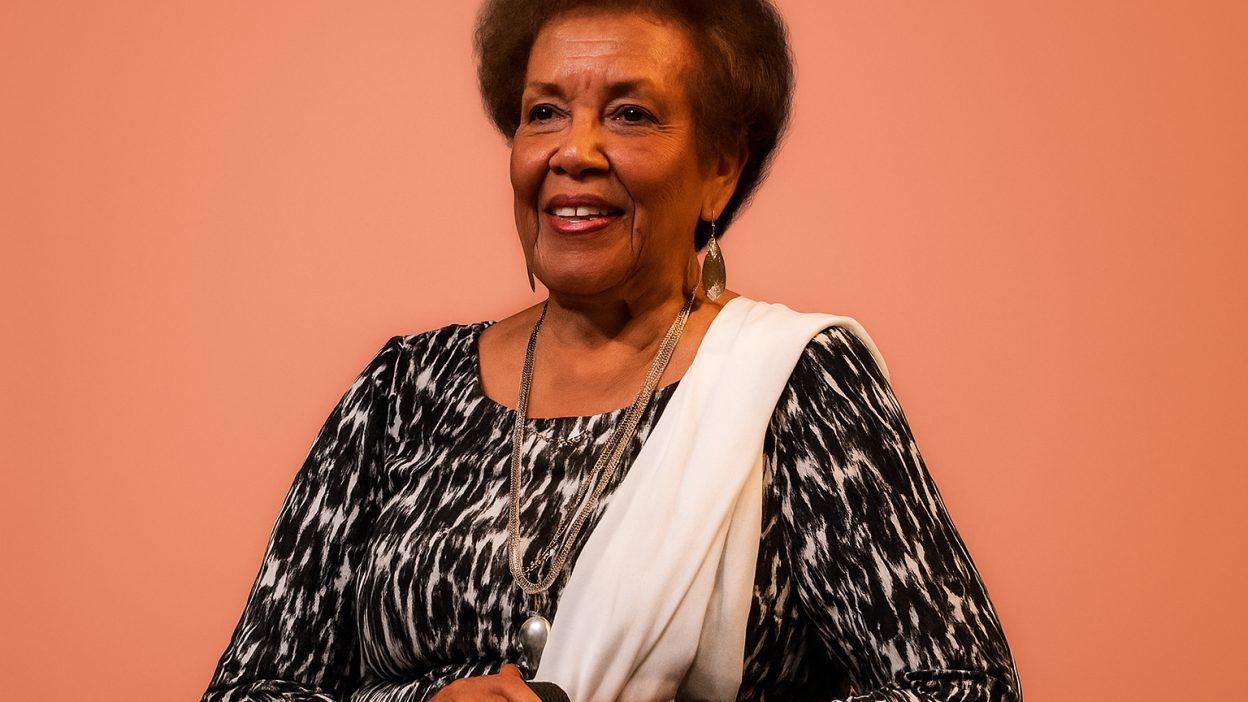
The name Joylette Goble often appears when people explore the personal world surrounding NASA mathematician Katherine Johnson, whose life inspired the bestselling book and film Hidden Figures. While much of the public focus sits naturally on Johnson’s groundbreaking trajectory calculations for Project Mercury and the Apollo missions, her eldest daughter, Joylette Goble (later known as Joylette Goble Hylick), has shaped an accomplished life and career of her own.
She stands at the crossroads of history and lived experience: a woman who grew up inside the quiet daily reality of the Space Race, a mathematician who followed her mother into NASA, and a storyteller who later helped document the family’s journey for new generations. Understanding Joylette’s life provides a deeper, more human picture of how scientific breakthroughs ripple through families, communities, and decades of STEM advancement.
This article offers a comprehensive, human-centered look at Joylette Goble’s early life, education, career, authorship, and ongoing role as a custodian of one of the most essential stories in American science.
Early Life and Family Foundations
Joylette Goble was born the eldest of three daughters in the Goble–Johnson household. Her parents, Katherine Johnson and James Francis Goble, created a home that centered firmly around education, discipline, and curiosity. Her sisters, Constance (often called Connie) and Katherine (Kathy), completed the family trio that would witness their mother’s brilliance long before the world did.
Growing up in Newport News, Virginia, after Katherine joined the National Advisory Committee for Aeronautics (NACA), Joylette lived in a household that embraced academic rigor with ease. Mathematics, music, and church life were woven seamlessly into the daily rhythm. The girls played instruments, practiced regularly, and were expected to excel in school not because of external pressure, but because achievement was treated as part of the family culture.
One of the most revealing aspects of Joylette’s childhood is the fact that she, like many children of extraordinary parents, did not immediately grasp the magnitude of her mother’s contributions. Katherine’s equations were vital to America’s earliest successes in crewed spaceflight, yet at home she presented herself simply as a working mother who valued accuracy, determination, and preparation. Joylette later reflected that the fullest understanding of her mother’s influence came gradually—first through stories around the dinner table, then through media coverage, and finally through international recognition many years later.
Living during the 1950s and 1960s, Joylette experienced two revolutions at once. The Space Race was unfolding in real time, and the civil rights movement was reshaping the future for Black families across the United States. Both realities shaped her worldview and later informed her work in public speaking, where she often discusses the importance of opportunity, representation, and education in STEM.
Growing Up in the Time of “Hidden Figures”
When audiences watch Hidden Figures, they see the segregated offices, the friction between progress and prejudice, and the vast pressure placed on the mathematicians responsible for keeping astronauts alive. Joylette grew up with these scenes not as cinematic set pieces, but as the unfiltered reality around her.
Her mother navigated a racially segregated workplace while performing mission-critical work. At the same time, the Goble–Johnson daughters were expected to focus on their studies, contribute to the household, and cultivate talents in math and music. It was a family where excellence wasn’t framed as exceptional—it was simply necessary.
While the film captures the emotional arc of Katherine Johnson’s rise into the national spotlight, Joylette’s perspective offers something quieter and more intimate. She witnessed the daily decisions Katherine made, from double-checking equations late at night to encouraging her children to think beyond societal limits. That behind-the-scenes context becomes critical when trying to understand why Joylette later stepped into roles that combined technical precision with a strong sense of social responsibility.
Academic Path: Hampton University and Drexel University
Reflecting her family’s emphasis on education, Joylette pursued higher learning with determination and clarity. Her choice to attend Hampton University—at the time still widely recognized as Hampton Institute—placed her in an environment where Black academic excellence was both celebrated and rigorously cultivated. The university has long been a cornerstone of STEM development for African American students, producing engineers, scientists, and educators who have shaped the scientific landscape.
After completing her undergraduate studies, Joylette deepened her technical and managerial expertise by earning a master’s degree in Management Information Systems from Drexel University. This combination of mathematics, computing, and organizational systems positioned her well for the emerging technological demands of the 1970s and beyond. It also reflects a generational progression: where her mother’s career centered around manual computation and analytical geometry, Joylette’s world was shifting toward digital systems, software development, and integrated engineering processes.
Her academic path was neither accidental nor purely inherited. It was the product of growing up with a model who demonstrated what was possible when talent intersects with opportunity.
NASA Career: Continuing a Legacy Through Mathematics
After graduating from Hampton University in 1962, Joylette followed her mother’s trajectory—quite literally—by beginning her professional life at NASA. The era into which she entered the agency was one of intense transformation. NASA was expanding rapidly, shifting from the early Mercury missions into the Gemini and Apollo programs. Slide rules were giving way to the first wave of computerized systems, and the agencies’ workforce was evolving to meet the complexity of new mission requirements.
Joylette’s work at NASA placed her within this dynamic environment. While public sources seldom provide detailed descriptions of her project assignments—a common limitation in historical documentation of many NASA employees—her presence within the agency during this period underscores her technical capability and the trust placed in her mathematical training.
It also marks a significant intergenerational milestone. Her mother’s groundbreaking calculations for John Glenn’s orbital flight paved the way for both scientific and social change. Joylette’s entry into NASA reflected the broader opening of doors that women, and particularly Black women, had long been denied. She represented a new kind of continuity—one where a daughter could walk into a workplace that her mother had helped transform.
Transition to Industry: Senior Engineer at Lockheed Martin
After her time at NASA, Joylette extended her technical career by joining Lockheed Martin, one of the world’s leading aerospace and defense companies. There, she worked as a Senior Requirements Engineer, a position requiring precision, systems-level thinking, and the ability to translate complex technical needs into practical, verifiable solutions.
Requirements engineering sits at the core of modern technological development. It blends analytical discipline with communication, ensuring that engineers, designers, and stakeholders share the same understanding of what a system must accomplish. Joylette’s background in mathematics made her well-suited for the logical rigor of the role, while her exposure to NASA’s mission-driven culture provided a strong foundation for handling large-scale engineering challenges.
Her career in industry demonstrates an important shift that often occurs among STEM professionals. While government agencies provide the early environment for scientific breakthroughs, the private sector often becomes the place where those skills mature, diversify, and scale. Joylette’s progression from NASA to Lockheed Martin illustrates how technical expertise can evolve alongside advancing technologies and growing organizational demands.
Author and Collaborator: Preserving the Family Narrative
Beyond her technical career, Joylette Goble has emerged as a thoughtful narrator of her mother’s story. She played a crucial role in two major books that document Katherine Johnson’s life and the family’s journey.
The first, “One Step Further: My Story of Math, the Moon, and a Lifelong Mission,” is a children’s book published by National Geographic Kids. Co-authored by Katherine Johnson, Joylette Hylick, and Katherine Moore, the book blends personal anecdotes, historical photographs, and gentle storytelling to highlight how family support, education, and perseverance helped shape one of NASA’s most iconic mathematicians.
The second, “My Remarkable Journey: A Memoir,” offers a more expansive narrative. Written with the assistance of Joylette and her sister Katherine Moore, this memoir presents Katherine Johnson’s life through a reflective, deeply personal lens. Joylette’s contributions allowed the book to achieve a level of intimacy that only a family member could provide. She supplied context for family stories, clarified details from the early years, and helped shape a narrative that bridges the technical and emotional dimensions of her mother’s experiences.
By participating in these works, Joylette stepped into the role of memory-keeper. She ensured that the telling of her mother’s story remained authentic, grounded, and richly human—qualities that have helped both books become valuable resources for educators and families seeking to understand the intersection of STEM, history, and civil rights.
Public Speaking and Legacy Stewardship
In the years following Hidden Figures, public interest in Katherine Johnson’s life soared. Joylette and her sisters found themselves uniquely positioned to support this cultural moment. They began speaking at science centers, universities, schools, and commemorative events. At gatherings like the Liberty Science Center’s Genius Gala and various university presentations, Joylette delivered remarks that highlighted not only her mother’s accomplishments but also the lessons they hold for today’s students.
Her reflections often emphasize responsibility, preparation, and the value of education. She speaks openly about growing up in a family where music and math were treated as universal languages, and where her mother’s calm confidence shaped a roadmap for resilience. Through these appearances, Joylette becomes more than a historical link; she becomes an advocate for empowerment through knowledge.
Her home in Mount Laurel, New Jersey, has become the base from which she continues to engage with communities and promote STEM education. She regularly participates in discussions that explore how the story of Hidden Figures can inspire future generations of scientists, engineers, mathematicians, and educators.
Joylette Goble in Popular Culture
Within the film Hidden Figures, Joylette appears as one of Katherine Johnson’s young daughters, portrayed by actress Ariana Neal. Although the film focuses primarily on Katherine’s professional journey, the presence of the Goble–Johnson children helps viewers understand the personal dimensions of her life. These scenes highlight the dual responsibilities Katherine carried—performing complex orbital calculations during the day while nurturing her daughters at home with equal intensity.
In study guides and educational materials connected to Hidden Figures, Joylette is often referenced as part of the family context that helped shape Katherine Johnson’s motivations and resilience. Her real-life achievements extend far beyond the screen, but her representation in popular culture bridges the gap between the cinematic portrayal and the lived reality.
The Broader Significance of Joylette Goble’s Story
Studying Joylette Goble’s life reveals several themes that enrich the broader narrative around American scientific achievement.
First, her story demonstrates the intergenerational impact of opportunity. Katherine Johnson’s access to advanced education enabled her daughters to pursue their own paths in STEM. Joylette’s career is part of a wider arc in which educational doors, once tightly closed, opened gradually across generations.
Second, Joylette embodies the evolution of STEM work from analog to digital. Her mother’s world relied on pencil, paper, and absolute precision in hand calculations; Joylette’s world increasingly revolved around computer systems, digital modeling, and integrated engineering frameworks.
Third, her continuing efforts in authorship and public speaking highlight the importance of preserving lived history. Stories like Katherine Johnson’s can easily become flattened in public memory, reduced to symbolic moments rather than experienced lives. Joylette’s voice ensures those stories remain complete, nuanced, and true to the people who lived them.
Finally, Joylette’s perspective reinforces a truth often overlooked in discussions about innovation: achievements in science rarely belong to a single person. They belong to families, communities, and networks of support that allow brilliance to flourish.
Also Read: Salma Shah Husband Andrew Smith: Their Full Story
Conclusion
Joylette Goble’s life is a testament to the far-reaching influence of Katherine Johnson’s legacy. She is a mathematician who stood on the threshold of NASA’s early transformations, an engineer who shaped complex systems in industry, an author who safeguarded her family’s narrative, and a speaker who continues to inspire future generations.
Her story is not an addendum to her mother’s; it is an essential extension of it. Through her work, her writing, and her stewardship, Joylette ensures that the lessons of perseverance, education, and courage remain alive and accessible well into the future.
If your goal is to understand the fuller, more human story behind Hidden Figures, then Joylette Goble is indispensable. She carries the quiet strength of someone who lived through history not as an observer, but as a participant—and who now shares that story so others may take one step further.