
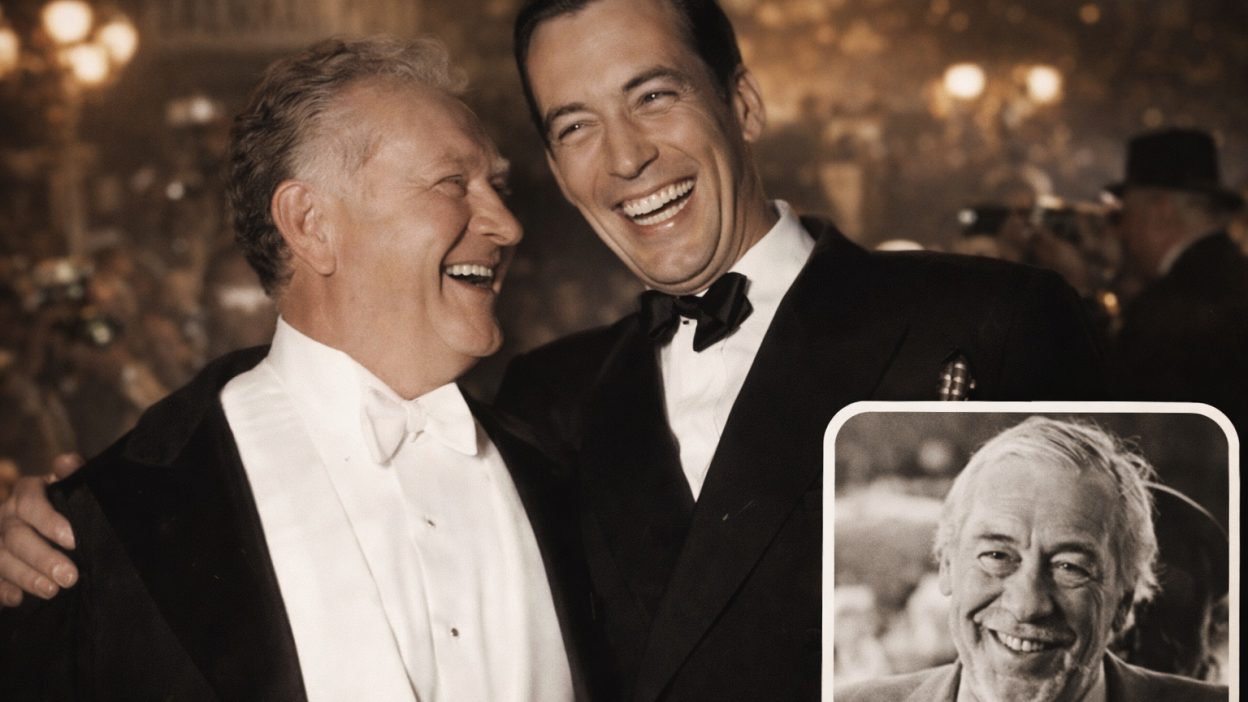
The name Pablo Huston surfaces quietly in the margins of Hollywood history. It does not appear on film credits, award lists, or red carpets. Yet it remains linked to one of the most influential directors of the twentieth century, John Huston. For decades, Pablo Huston has been mentioned only in passing—usually as an adopted son, occasionally as a mystery, and often as a subject of online confusion.
This biography-style account focuses on what can be responsibly said about Pablo Huston, based on verifiable historical references and careful interpretation. Rather than speculation or myth-making, it aims to place him accurately within the context of the Huston family and the era in which his story briefly entered public view.
Early Life and Adoption
Pablo Huston’s early life is not documented in the same way as those of public figures or entertainers. What is known comes from biographical references tied to John Huston’s personal life during the late 1940s.
During Huston’s marriage to actress Evelyn Keyes, the couple adopted a boy named Pablo. Several historical accounts associate this adoption with Huston’s time working in Mexico, particularly during the production of The Treasure of the Sierra Madre. While details differ across sources, the consistent narrative places Pablo’s origins in Mexico and describes the adoption as occurring during or shortly after that period.
At the time, international adoptions were far less regulated and far less documented publicly than they are today. As a result, little is known about Pablo Huston’s birth circumstances, exact date of birth, or biological family. What remains clear is that, by the early 1950s, he was living within the Huston household and was publicly acknowledged as John Huston’s adopted son.
A Brief Appearance in the Public Record
One of the most cited references to Pablo Huston appears in a 1952 profile of John Huston published in The New Yorker. In a brief but telling passage, Pablo is mentioned as Huston’s fifteen-year-old adopted son attending a private film screening.
This single line has carried disproportionate weight in later years, largely because it confirms Pablo’s presence in Huston’s life at a specific moment in time. It establishes his age, his familial role, and his proximity to the professional world surrounding his adoptive father.
Importantly, the reference does not dramatize Pablo’s role. He is not described as a performer, a prodigy, or a public personality. He appears simply as a teenager within a family setting. That understated portrayal aligns with everything else known about him.
Life Within the Huston Household
Life inside the Huston family was rarely conventional. John Huston’s career involved constant travel, long periods on film sets, and immersion in creative and social circles that blurred the boundaries between work and private life. Evelyn Keyes, meanwhile, was an established actress navigating her own career within the studio system.
For a child adopted into this environment, stability may have been difficult to achieve. Biographical commentary about Huston often describes him as charismatic, demanding, and intensely focused on his work. While these traits fueled his artistic success, they may not have translated easily into traditional parenting.
Some later accounts suggest that the relationship between John Huston and Pablo became strained over time. These references do not offer concrete incidents or timelines. Instead, they describe a gradual emotional distance that eventually led to estrangement. Such descriptions are consistent with many accounts of complicated family dynamics in high-profile creative households, particularly during the mid-twentieth century.
Estrangement and Disappearance from Public View
By the time John Huston’s later family life became more widely documented, Pablo Huston was no longer mentioned. Public attention shifted to Huston’s other children, several of whom pursued careers in acting and filmmaking and became well-known in their own right.
Pablo’s absence from these narratives does not necessarily indicate conflict or tragedy. It may simply reflect a choice, whether his own or shaped by circumstance, to live privately. Unlike his famous relatives, Pablo did not enter the entertainment industry, grant interviews, or publish memoirs.
From a historical perspective, this absence creates a gap that modern audiences often try to fill. However, responsible biography requires restraint. Without reliable documentation, it is not appropriate to assign motives, outcomes, or personal experiences beyond what the record supports.
Confusion With Other Individuals
In recent years, the name Pablo Huston has been complicated by digital-era search behavior. One source of confusion is the existence of contemporary creatives with similar names, including individuals named Juan Pablo Huston who are active in photography and filmmaking outside the United States.
These individuals are not connected to John Huston or his family. The similarity in names has nevertheless led to mistaken associations on blogs and low-quality biography websites. Over time, these inaccuracies have been repeated, giving the impression of a fuller public life for Pablo Huston than evidence supports.
This phenomenon highlights a broader issue in online biography culture. When a name is rare but linked to fame, search engines reward content that appears comprehensive, even when it is speculative. As a result, fictionalized narratives can gain visibility simply through repetition.
Pablo Huston in the Context of Adoption History
Understanding Pablo Huston’s story also requires understanding the era in which his adoption took place. In the 1940s and 1950s, adoption practices differed significantly from modern standards. Records were often sealed, cross-border adoptions lacked standardized oversight, and public disclosure was limited.
For families involved in the entertainment industry, privacy concerns were especially pronounced. Children were often shielded from press attention, and adoptive histories were not always discussed openly. This cultural context helps explain why so little verifiable information about Pablo Huston exists today.
Rather than viewing the lack of detail as suspicious, it is more accurate to see it as typical of the time. Many adopted individuals from that era have similarly sparse public records, particularly if they did not pursue public careers.
Relationship to the Huston Legacy
The Huston family occupies a significant place in film history. John Huston’s influence extended across genres and generations, shaping the careers of actors, writers, and directors. His later children became public figures, contributing to a multigenerational artistic legacy.
Pablo Huston’s place within that legacy is quieter but still real. He represents a lesser-seen dimension of the family story, one that does not fit neatly into narratives of fame and success. His life underscores the fact that not all members of celebrated families share the spotlight or the same trajectory.
From a biographical standpoint, this contrast is important. It reminds readers that family histories are rarely uniform and that public recognition is not a measure of personal significance.
Why Interest in Pablo Huston Persists
Despite the limited information available, interest in Pablo Huston continues to resurface. This persistence is driven by several factors, including fascination with celebrity families, curiosity about adoption stories, and the internet’s tendency to revisit unresolved narratives.
There is also a human element at play. Readers often search for Pablo Huston not out of idle curiosity, but out of a desire to understand the people who exist at the edges of famous lives. These peripheral figures can feel more relatable precisely because they remain undefined.
In this sense, Pablo Huston functions less as a traditional biographical subject and more as a reminder of how history is recorded. Some lives are documented in exhaustive detail. Others appear only briefly, leaving behind questions rather than answers.
Responsible Biography and the Limits of Knowledge
Writing about Pablo Huston requires acknowledging what cannot be known. There is no verified public record of his adult career, personal relationships, or later years. Claims that attempt to supply these details without sourcing should be treated with skepticism.
A responsible biography does not attempt to resolve every mystery. Instead, it preserves the distinction between documented fact and conjecture. In Pablo Huston’s case, that distinction is essential to maintaining accuracy and respect.
The temptation to embellish is strong, particularly in digital media environments that favor completeness. Yet restraint is what allows a story like this to remain truthful.
Read Also: Bridget Rooney Biography: Legacy, Family, and Life
Conclusion
Pablo Huston occupies a unique position in Hollywood history. He was real, present, and acknowledged, yet he remained largely outside the public narrative that surrounded his adoptive family. His story, as far as it can be told, is one of brief visibility followed by long privacy.
Rather than viewing that privacy as a void to be filled, it is more appropriate to see it as a boundary. Pablo Huston’s life reminds us that not every connection to fame results in a public legacy, and not every meaningful story is fully documented.
In an era that often confuses visibility with importance, his quiet presence in the historical record serves as a subtle counterpoint. Sometimes, the most honest biography is one that knows when to stop speaking.


