Pest control rarely makes headlines, yet one quiet shift inside the industry has been reshaping how cities, food chains, and governments manage risk. Anticimex, a Swedish group founded in 1934, is no longer just sending technicians into buildings. It’s wiring those buildings with sensors, collecting data, and using acquisitions to spread that model faster than competitors can respond.
If you’ve searched for “anticimex 3d sanidad ambiental / wisecon estrategia de consolidación,” you’re really asking about that shift. You want to know how a traditional service business turned into a data-driven network, and how Spain became one of its most visible proving grounds. Stick with this, and you’ll see how WiseCon technology, aggressive acquisitions, and local integration all connect into one strategy that’s changing the rules of the game.
How Anticimex Built Its Consolidation Model
Most consolidation stories start with money. This one starts with timing. Around 2015, Anticimex was already expanding across Europe and North America, but the leadership saw something coming that many competitors ignored. Pest control was about to move from scheduled visits to constant monitoring.
That same year, Anticimex bought 20 percent of WiseCon, a Danish company developing electronic traps and sensor-based systems. It wasn’t a flashy move, and at the time it looked like a side bet. But by 2017, Anticimex bought the remaining 80 percent and turned WiseCon into its Innovation Center in Denmark. That tells you the original plan worked.
Here’s where it gets interesting. Anticimex didn’t wait to finish building its technology before expanding. It pushed both at the same time. Since 2015, the company has completed more than 400 acquisitions worldwide, building density in markets where it already operated. That approach matters because it let Anticimex install its digital model inside companies it was already buying, instead of trying to retrofit everything later.
By 2024, the group reported 517,000 installed SMART devices globally, with revenue reaching SEK 16.9 billion and an EBITA margin above 20 percent. Those numbers don’t just show growth. They show a business that has moved beyond labor-heavy services into something closer to a monitored system.
The Role of WiseCon in the Strategy
WiseCon wasn’t just another acquisition. It became the foundation of Anticimex’s entire operating model. The company’s Innovation Center now employs around 70 specialists focused on SMART devices and digital services, with manufacturing and testing handled in-house in Denmark.
What surprised me when reviewing their materials is how deeply integrated this center has become. It’s not a supplier sitting on the edge of the business. It’s the engine that shapes how every acquired company eventually operates. The center holds more than a dozen patents and over 120 registrations, which gives Anticimex control over both hardware and software.
So what does this actually mean for consolidation? It means every acquisition isn’t just about adding customers. It’s about adding nodes to a system. A local pest control firm becomes part of a network that shares data, processes, and technology. Over time, that standardization reduces variation and improves margins.
There’s a catch, though. Owning the technology doesn’t guarantee adoption. Field teams still need to trust the system, and customers need to see value in it. Anticimex has spent years aligning those pieces, and that’s one reason the strategy has held together.
How Anticimex 3D Sanidad Ambiental Operates in Spain
Spain is where this strategy becomes tangible. Anticimex 3D Sanidad Ambiental operates across the mainland, the Balearic Islands, and the Canary Islands, offering services to industries that can’t afford surprises. Think food production, hospitality, healthcare, and public administration.
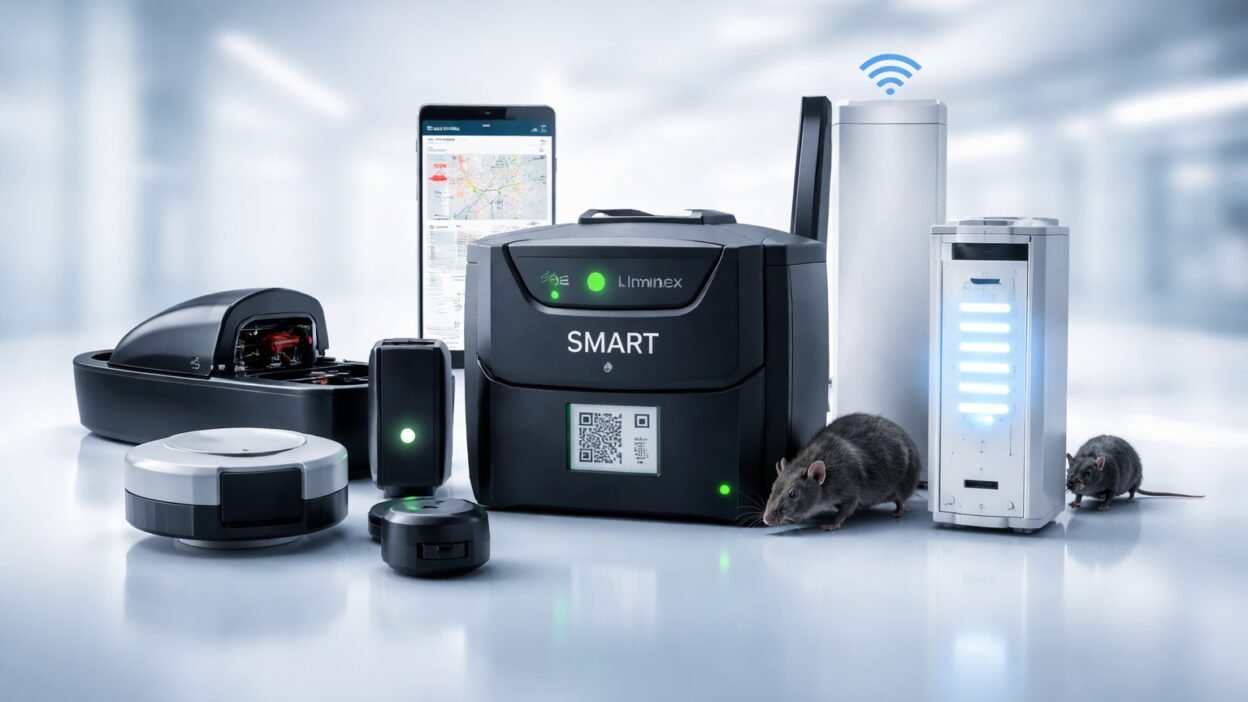
Walk into one of their Spanish operations and you won’t see a traditional pest control setup. You’ll see networks of connected traps, sensors tracking movement and temperature, and dashboards showing real-time activity. The company says it has more than 300,000 connected units in Spain alone, feeding constant data into its systems.
That changes the rhythm of the work. Instead of waiting for scheduled inspections, technicians respond to alerts. If rodent activity spikes in a warehouse overnight, the system flags it immediately. That reduces response time and, more importantly, reduces the chance of a small issue turning into a compliance failure.
A local example makes this clearer. In Villamanrique de Tajo, near Madrid, the municipality tested intelligent rodent control devices using motion and temperature sensors. The goal wasn’t just to eliminate pests. It was to monitor activity continuously without relying on heavy chemical use. That kind of project shows how the model fits public-sector needs, especially as regulations tighten.
The Mechanics of Consolidation in Spain
Acquisitions are only the first step. Integration is where the real work happens. In Spain, Anticimex has been actively merging acquired companies into its main operating entity. In July 2025, official filings showed the absorption of firms like Gabinete Técnico de Sanidad Ambiental, GTSA Pest Control, and Plaserman Salud Pública.
That kind of consolidation might sound administrative, but it’s critical. It simplifies management, reduces duplication, and aligns all operations under a single system. Without that step, acquisitions remain fragmented and harder to control.
Branch expansion tells a similar story. In Murcia, Anticimex opened a 1,400-square-meter facility in Molina de Segura, employing around 100 people and serving more than 2,000 clients. That isn’t just growth for its own sake. It’s about building regional hubs that can support both digital monitoring and on-the-ground response.
Here’s what most people get wrong. Consolidation isn’t just about buying competitors. It’s about building density. The closer your branches are to your customers, the faster you can act on data coming from sensors. That combination of digital insight and physical proximity is what makes the model work.
Why Regulation and Customer Pressure Are Driving This Shift
You might wonder why customers are willing to change how they buy pest control. The answer isn’t marketing. It’s pressure.
Food safety rules in Europe already require strict monitoring and documentation. Businesses need proof that they’re controlling risks, not just reacting to them. Traditional pest control, with its periodic visits, doesn’t always provide that level of assurance.
Regulators are also tightening the use of chemicals. In 2025, the European Chemicals Agency’s Biocides Committee supported restrictions on certain rodenticide uses, especially where safer alternatives exist. That doesn’t eliminate chemicals entirely, but it pushes companies toward more targeted and monitored approaches.
That said, digital systems don’t eliminate the need for expertise. Experienced technicians still interpret data, identify patterns, and decide how to act. The technology makes them more effective, but it doesn’t replace their judgment.
From a customer perspective, the value becomes clearer over time. Fewer disruptions, better audit trails, and less reliance on chemicals all translate into lower risk. And in industries like food production, risk is everything.
What This Means for Competitors and the Industry
Anticimex isn’t alone in trying to modernize pest control, but it has a head start. Its combination of acquisitions and proprietary technology creates a barrier that’s hard to replicate quickly.
Smaller operators can still compete, especially in local markets where relationships matter. But larger clients are increasingly looking for providers who can offer consistent service across multiple locations, backed by data. That’s where consolidation gives Anticimex an advantage.
There’s also a financial angle. A business built on recurring monitoring contracts tends to be more predictable than one based on one-off service calls. That predictability makes it more attractive to investors and supports further expansion.
Not everyone agrees that this model will dominate. Some critics argue that smaller firms can adopt similar technologies without giving up independence. Others question whether customers will continue paying a premium for digital services over time. Those debates are still unfolding.
But here’s what’s hard to ignore. Anticimex has already installed hundreds of thousands of devices and continues to acquire companies at a steady pace. That combination of scale and technology is shaping expectations across the industry.
Frequently Asked Questions
What is the Anticimex 3D Sanidad Ambiental / WiseCon consolidation strategy?
It refers to Anticimex combining acquisitions with WiseCon’s digital pest-control technology to build a standardized, data-driven network. The goal is to integrate local companies into a shared system that improves efficiency and monitoring.
Why did Anticimex acquire WiseCon?
Anticimex acquired WiseCon to gain control over smart pest-control technology, including sensors and automated traps. This allowed the company to shift from reactive services to continuous monitoring.
How important is Spain in this strategy?
Spain is a key market where Anticimex has implemented national coverage, integrated acquisitions, and deployed large-scale digital monitoring systems. It serves as a clear example of how the strategy works in practice.
Does digital pest control replace traditional methods?
Not entirely. Digital systems enhance monitoring and reduce reliance on chemicals, but trained technicians still play a central role in interpreting data and taking action.
How many SMART devices does Anticimex use?
The company reported over 500,000 installed SMART devices globally by 2024, with more than 300,000 connected units in Spain alone.
What advantage does consolidation give Anticimex?
Consolidation allows Anticimex to build scale, standardize operations, and deploy its technology across a larger network. This improves efficiency and strengthens its position against smaller competitors.
Conclusion
Anticimex didn’t reinvent pest control overnight. It built a system piece by piece, starting with technology and expanding through acquisitions that reinforced that system. WiseCon gave it the tools, but the real strength comes from how those tools are deployed across hundreds of operations.
Spain shows what that looks like in practice. You have a network that keeps expanding, absorbing smaller firms, and layering digital monitoring on top of traditional expertise. It’s not perfect, and there are still questions about cost and adoption. But the direction is clear.
If you’re watching this industry, the takeaway is simple. Growth alone isn’t enough anymore. The companies that win will be the ones that turn services into systems, and systems into something customers can trust every single day.
And that shift isn’t slowing down anytime soon.